
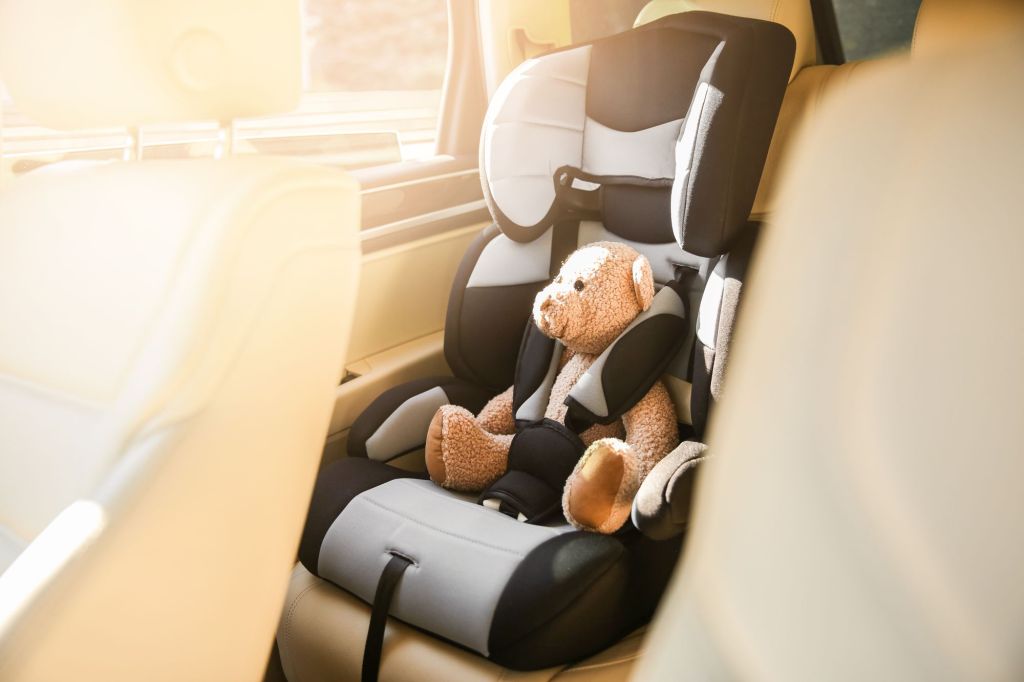
Renting the Right Car Seat
There are many different types of car seats. For someone looking to rent a car seat, it can feel like a jungle full of terms and variations of all kinds. Here we help you get an overview!
From the time a child is born until they reach 135 cm in height, the law requires that the child must have a special safety device when traveling in a car. First comes the so-called baby seat, then a rear-facing car seat, followed by a forward-facing car seat, and finally a booster seat. The general recommendation is to stay in each stage as long as possible, since that is the safest option – though of course it requires that both the child and the seat belt fit properly for it to be completely safe.
First and Foremost: ISO-fix
Below we go through the different types of seats available, what sets them apart, and when to use which.
But first, let’s clarify a basic concept: ISO-fix. ISO-fix are anchoring devices located at the bottom of the backseat in newer cars. Previously, these were steel rings in the joint between the seat and the backrest, but now they are often visible holes with a plastic frame at the base of the backrest. Sometimes there’s a small plastic cover over the holes that must be removed before using ISO-fix. Car seats with ISO-fix connectors have arms that lock into the anchors. This makes the seat very stable and secure.
Baby Seat
A baby seat is used from newborn up to about 12–15 months. All baby seats have a maximum weight limit – make sure the child stays within that. Baby seats typically have a carry handle so the whole seat can be moved in and out of the car without lifting the child out. This is a big advantage with small children who sleep a lot. Many models are rounded at the bottom so you can rock the baby in the seat, and there are often adapters to attach the seat to a stroller.
All baby seats can be fastened with the car’s seatbelt, but it can be a bit tricky. That’s why many come with an ISO-fix base, which is installed in the car. The baby seat then simply clicks into the base and locks securely.
Rear-Facing Car Seat
The next step is a rear-facing car seat – from around age 1 until the child no longer fits, ideally until about 5 years old. Typically the seat becomes too small when the legs don’t have enough room, but this can be solved with a spacer that moves the seat slightly forward. Remember to protect the car’s backrest since the child’s feet will press against it – a towel, blanket, or seat protector works well (some even have an iPad pocket for long trips).
There are ISO-fix versions, which are preferred for safety, but many can also be installed using the seatbelt.
Forward-Facing Car Seat
When the child has outgrown the rear-facing seat, it’s time for a forward-facing car seat. The difference is that now the car’s own seatbelt holds the child in place. The seat raises the child so that the belt sits correctly across the shoulder and hips. They often also have large side protectors around the head.
Many parents find this stage positive since the child can see more, is often more content, and it’s easier to talk during the ride.
ISO-fix is also possible here. Since it’s now the car’s belt holding the child, the seat may otherwise “move forward” in a collision. With ISO-fix, the seat is fixed in place, and the child avoids extra pressure from the seat back.
Booster Seat
The booster seat is the final step. It’s simply a hard foam cushion that raises the child so that the car’s seatbelt fits correctly across the chest and hips.
Rent the Car Seat You Need at Hygglo.com
On Hygglo.com you’ll find all the car seats you might need – from baby seats and rear-facing car seats to forward-facing car seats and booster seats.
 Hygglo Blog